

The Chicago Bulls, above all else, need to get a concrete idea of what's left to be unlocked on their existing roster in 2026-27.
Thankfully, Tiago Splitter is the right coach for the job. He has a player development background both in the NBA and in Europe, and he certainly has the ability to maximize the talent of some of the 3-and-D pieces Chicago currently has in the fold.
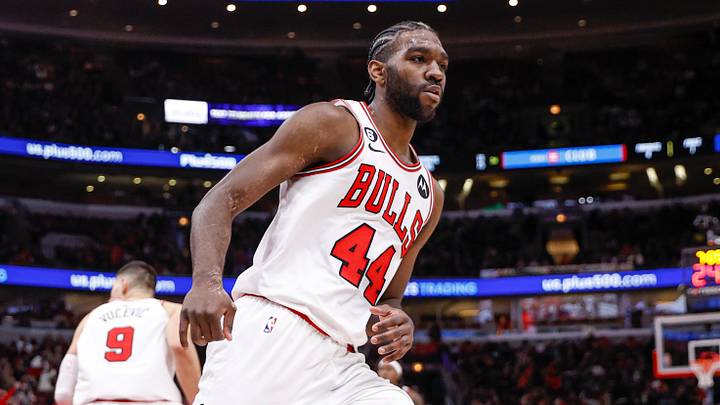
This will, therefore, be a make-or-break season for Patrick Williams. He's been nothing but disappointing throughout his six NBA seasons, and he hit a low point in 2025-26, averaging just seven points and shooting just 37.2% from the floor. He has three years at $18 million annually left on his contract (with a player option), and at this point, the Bulls would need to part with significant draft capital simply to get another team to take him on.
But this team also doesn't currently have a wing off the bench with his mix of size and athleticism. Noa Essengue could be the long-term replacement, but after missing his rookie season with a shoulder injury, he likely won't be ready for extensive rotational minutes.
That could buy Williams some time to make his mark in this rotation— especially as Chicago figures out what its long-term development plan is for Essengue.
Patrick Williams has time to save his Bulls career— even if it's limited
Frankly, the Bulls will have an incredibly difficult time moving off of Williams' contract even if he proves to have any trade value whatsoever in 2025-26. The best-case scenario for Chicago, at this juncture, is that Williams becomes a viable rotational piece and justifies at least a portion of that $18 million salary.
The tools are there, at least theoretically. But he hasn't shown the physicality or the effort to truly maximize that, and his inconsistent perimeter shooting hasn't helped matters.
Right now, the Bulls' ideal bench unit likely features Tre Jones and Isaac Okoro in the backcourt, Essengue and Jalen Smith in the frontcourt, and Zach Collins as the backup center. Dailyn Swain and Rob Dillingham will certainly be in that mix as well.
But Essengue did not look ready for that role in Summer League. He averaged just 6.5 points on 43.8% shooting from the field across four appearances in Las Vegas, and almost every movement he made on the court looked awkward or clunky in some capacity. Chicago knew this is what they were getting when they drafted Essengue— he'll simply need time to fill out his frame and maximize the rangy, 3-and-D skill set that the Bulls see in him long-term.
As soon as he proves that he's ready, he'll likely slide into whatever Williams' role in the rotation is. But as long as Essengue remains on the fringes, Williams has a chance to take strides in Splitter's system.
If history is any indication, it's doubtful that he'll seize the opportunity. But Essengue's slow development, at the very least, gives him a chance to prove he's worthy of minutes on this new-look Bulls team.
 Add us as a preferred source on Google