

The Chicago Bulls have finally hit the reset button and invested in rebuilding their roster from the top down. In doing so, they've positioned themselves to load up on assets that can position them to draft cornerstones, trade for impact players, and ultimately contend again.
Thankfully, the Oklahoma City Thunder have provided the perfect blueprint for the Bulls to follow as they load up on assets and build around promising rookie Caleb Wilson.
Oklahoma City is a world-beating force in 2026, having finished each of the past three seasons with the best record in the Western Conference. The Thunder also won the NBA championship in 2024-25 and reached the Conference Finals in 2025-26.
The Thunder won fewer than 25 games in 2020-21 and 2021-22, however, which shows how quickly a team can rise from woeful to sustainably elite.
Chief among those lessons is the importance of knowing when to part with players who can be swapped for assets that will benefit a team more in the long run. For instance, Oklahoma City swapped Paul George for Shai Gilgeous-Alexander, four unprotected first-round picks, a protected first-rounder, and a pick swap.
That was one of several moves that enabled Oklahoma City to not only build out its depth chart, but load up on draft picks and ultimately retool when difficult departures became necessary.
OKC has loaded up on draft picks, drafted well, and retooled on the fly
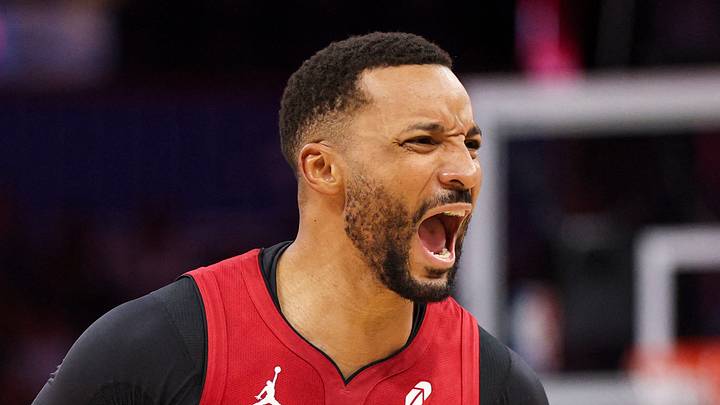
Chicago has a chance to plant the seeds for the type of maneuverability that’s allowed Oklahoma City to build, retool, and tweak its roster while still having assets in the bank. That all starts with Nicolas Claxton and Norman Powell.
Powell signed a a two-year, $44,075,000 contract with a second-year team option, while Claxton has two years and $44,420,458 left on his deal. Both salaries can realistically be traded.
As teams become desperate for veteran help at the trade deadline, Chicago shouldn’t be afraid to maximize Claxton and Powell’s trade value. Doing so could net them future first-round draft picks that yield some combination of developable star power, depth, and insurance for injuries or bad contracts.
Considering the burden the Patrick Williams deal has placed on the Bulls, having a surplus of team-friendly contracts for developable talent would be a welcome change.
Bulls should evaluate everyone's fit in 2026-27—even up-and-comers
From there, Chicago must be brutally honest with itself about Matas Buzelis and Josh Giddey. Both are exceptionally talented, but if they can’t put the pieces together in the way the Bulls need them to, then trading a promising young perimeter standout could prove to be a necessary evil.
To put it simply: As a team that’s finally escaping limbo, no one on the roster but rookie Caleb Wilson should be locked in beyond the 2026-27 season.
Clearly, the Bulls would have reason to keep the group together if they exceed expectations to the point of believably competing in the Eastern Conference this year. If they're back in the realm of .500 or worse, however, then they must prioritize the acquisition of draft picks and up-and-comers who fit Wilson's timeline.
Thankfully, much as the Thunder traded players such as George, Giddey, and Al Horford for draft picks and roster upgrades, the Bulls have the personnel to begin doing the same.
 Add us as a preferred source on Google