

It's worth being straightforward here—the Chicago Bulls are going to be one of the worst teams in the NBA this season.
There was reason to believe otherwise before the season began, especially if Matas Buzelis and Josh Giddey became acclimated to Tiago Splitter's transition offense from the jump. But after seeing the on-court product the Bulls have put out across their first 10 games, it's hard to see them being anything other than a bottom-two or three team in the Eastern Conference.
The thing is, that's an acceptable outcome. Chicago picked top-five in this year's NBA Draft, and under the new lottery rules, teams are not allowed to pick in that range three years in a row. Given the relative strengths of this year and next year's draft classes, getting penalized under the new NBA Draft system in 2027 wouldn't be the worst outcome in the world.
The goal for this season, then, is for the Bulls to identify and develop their potential trade assets in a bid to gain some extra draft capital at the deadline. At this point, no one outside of Caleb Wilson should be exempt from that level of evaluation.
And with Wilson out for at least a month with a hand injury, Chicago has a unique opportunity to distribute touches and developmental opportunities more evenly across its roster. Patrick Williams' recent re-entry into the rotation, then, is a somewhat significant development in that light.
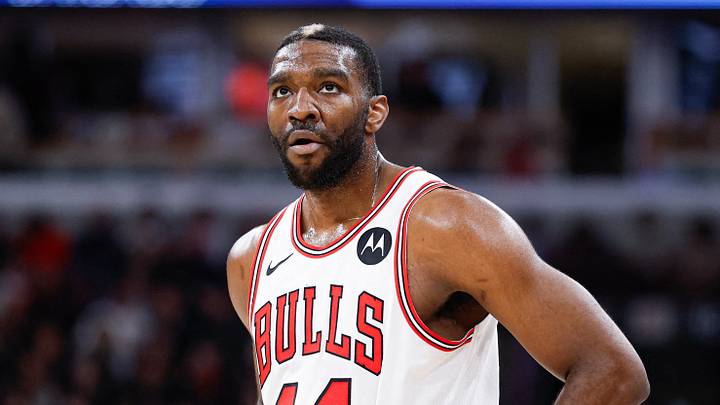
Patrick Williams is never going to be a premier trade candidate—but the Bulls need to what they can to increase his value
There's very few people that are still holding out hope for Williams to become a consistently effective NBA player. His interior scoring and mix of defense and rebounding simply aren't sufficient to warrant rotational consideration on any competitive NBA team at this point in his career. And his contract—for which he's owed another $54 million between now and the end of 2028-29—makes moving on from him infinitely more difficult.
But, again, the Bulls' aim this season should be to truly identify the strengths of this roster and work toward re-constructing around those this offseason. Williams is included in that endeavour, whether he's in Chicago or not.
While Williams was dealing with a groin injury earlier in the season that kept him officially listed as 'inactive', it's clear that Splitter had no initial plans to use him in the rotation. He did not play in any of the Bulls' first seven games this season. But when Norman Powell, Dailyn Swain, and Tobe Awaka all went down with brief injuries, there was room for some significant minutes for the seventh-year forward.
Across three games against the New York Knicks, Philadelphia 76ers, and San Antonio Spurs,. Williams saw an average workload of 24.3 minutes, posting 6.7 points, 3.3 rebounds, and three assists while shooting 47.1% from the field. Now, that's not a player teams would dish out draft capital for me—let alone be willing to pay $18 million a year on a multi-year deal.
But there were some encouraging signs there. Williams had a plus/minus of 18 during his minutes on the court during those three games, and he was able to match the physicality of the Spurs bench during his third outing, posting seven rebounds and a block while playing relatively viable defense.
When this rotation is whole, Williams isn't consistently seeing those kind of minutes. But unless the Bulls want to swap Jalen Smith back to power forward, they don't truly have any sort of physical presence outside of Leonard Miller or Williams that can help take on minutes at the four-spot. Perhaps Miller is the preferable option there given how he played during the preseason, but it feels like Splitter will be willing to give Williams the opportunity to claim some of that workload over the coming games.
Now, the Bulls don't need Williams to gain significant trade value—and perhaps they're better keeping him on for another year or two as a salary-filling piece as they undertake the rest of this rebuild. But if they can get a team to take his deal on, even as a tack-on piece in a larger package, it could pave the way for Chicago to add even more young talent to the roster moving forward.
At the very least, that feels like more of a possibility than it did last week, and that's an encouraging sign for the Bulls as the organization figures out its new direction.
 Add us as a preferred source on Google