

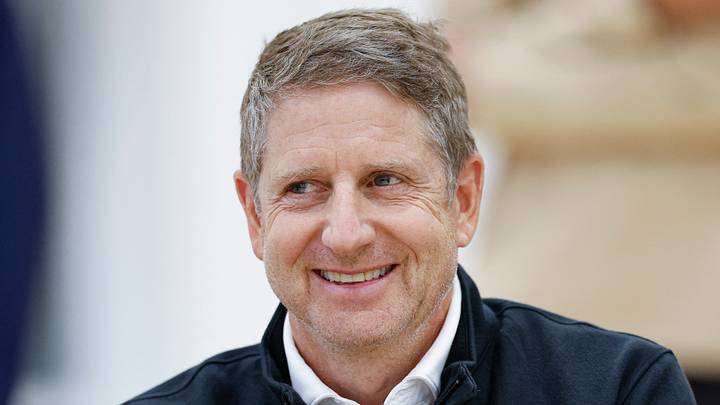
In the news aftershock of the Los Angeles Lakers’ record-setting $12.5 billion pending ownership-sale transaction that will transfer the franchise’s majority ownership stake from Mark Walter to Joshua Kushner and Bob Iger, Mike Ozanian of CNBC estimates double-digit percentage increases in team valuations for all 30 NBA franchises.

The Chicago Bulls, along with the New York Knicks, are projected to be the highest team valuation beneficiaries of the Lakers’ ownership change, as CNBC estimates both franchise valuations will increase by 26% as a result of the transaction.
For the Bulls, the news of their franchise valuation’s tide-like swelling by an estimated $1.65 billion is one of the few franchise positives of the 2020s, aside from the 2026 NBA Draft gift of landing top-lottery prospect Caleb Wilson with the fourth overall pick.
There are important implications for the Bulls’ front office to consider in their basketball operations strategy as a result of the Lakers’ pending ownership sale to Kushner and Iger.
Chicago Bulls - a financially stable NBA franchise
Based on Ozanian’s reporting, as of the 2024-25 NBA season, the Chicago Bulls ranked seventh in profit ($121 million EBITDA) and 12th in revenue ($413 million) among all 30 NBA franchises.

As a collective franchise organization, the Bulls have profitable operations and collect more revenue than 18 other NBA franchises, despite the franchise earning only two playoff appearances in its last 10 NBA seasons, dating from the 2025-26 NBA season.
Bulls President and CEO Michael Reinsdorf, in the same 10-year span, has replaced two Bulls front office administrations, most recently in April 2026 via the firing of Arturas Karnisovas and the hiring of his replacement, Bulls executive vice president of basketball operations Bryson Graham.
Context for Chicago Bulls roster decisions
The challenge ahead for Bryson Graham, if he is interested in building a winning Bulls roster, let alone a title contender, is that he must make a credible case in his Bulls basketball operations department budget requests for spending that presumably supports Michael Reinsdorf’s overarching motives to run a financially stable franchise in terms of revenue and profit.

Spending on additional player development staff, scouting budgets, and the big red elephant in the room (the luxury tax) should have a financial case for benefiting Reinsdorf’s profit and revenue growth.
Otherwise, why would Bulls ownership spend money on basketball operations they’d otherwise pocket by doing nothing? The Lakers’ valuation gift to the Bulls should only incentivize Bulls ownership to continue to prioritize organizational stability over league-wide on-court competition.
NBA franchise profit’s ripple effects
Worth noting from Ozanian’s reporting, aside from the team valuation impact across the league, Bulls fans and NBA fans at large should note the bottom five NBA franchises in terms of profit (EBITDA) as of the 2024-25 NBA season: Milwaukee Bucks (26th), Boston Celtics (27th), Dallas Mavericks (28th), Minnesota Timberwolves (29th), and Phoenix Suns (30th).

Volatile organizational dynamics in all five franchises have made NBA headlines leading up to and after the 2024-25 NBA season. The Bucks infamously waived and stretched guard Damian Lillard’s remaining $113 million salary in the 2025 NBA offseason to nominally acquire center Myles Turner via free agency and, more practically, escape the first-apron tier of cap spending.
The Boston Celtics sent seismic shockwaves through the NBA universe during the 2026 NBA offseason by trading their superstar wing Jaylen Brown, who is extension-eligible, to their Eastern Conference archrival, the Philadelphia 76ers.

The Dallas Mavericks are forever etched in NBA infamy for trading prime Luka Doncic during the 2025 NBA Trade Deadline period to the Los Angeles Lakers for a return that has depreciated to guard Max Christie and a single Lakers future first-round pick as of the 2026 NBA offseason.
On the heels of the Lakers’ ownership sale, Friday, ESPN's Shams Charania reported the closure of an ownership sales transaction for the Minnesota Timberwolves that will transfer majority ownership of the franchise from Marc Lore to Marc Stad.
American business leader Marc Stad has completed a deal to become the controlling owner and largest shareholder of the NBA’s Minnesota Timberwolves and WNBA’s Minnesota Lynx by buying the majority of co-owner Marc Lore’s stake at a $4.5 billion valuation, sources tell ESPN. pic.twitter.com/EUvuf9SGkQ
— Shams Charania (@ShamsCharania) August 21, 2026
Meanwhile, ominous optics in reporting by Duane Rankin of Arizona Republic about Mat Ishbia’s future as the majority owner of the Phoenix Suns have grown as his mortgage business, United Wholesale Mortgage, Inc., has received public scrutiny over negative quarterly financial results.
When it comes to the evolving business environment of the NBA, franchise profit is important context that Bryson Graham must factor into his collaboration with Michael Reinsdorf if he is to indeed build a winning Bulls franchise.
 Add us as a preferred source on Google