

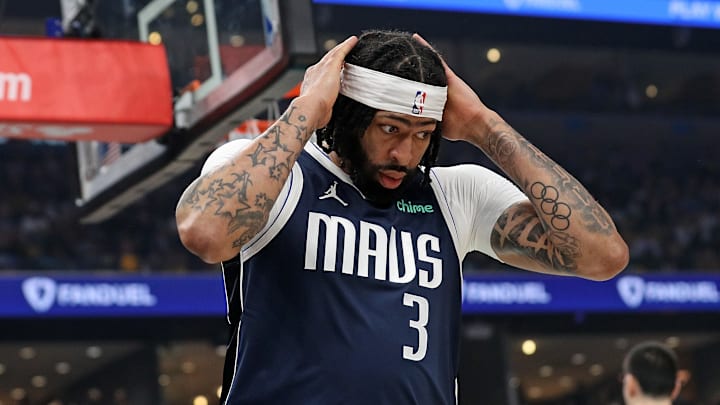
Trade rumors are heating up once again in Chicago, and this time the chatter links the Bulls to 10-time All-Star Anthony Davis. The rumors have gained so much traction that Davis has emerged as the overwhelming 2/1 favorite to land in Chicago if he’s traded before the 2026 NBA trade deadline.
And this isn’t just random speculation, either. According to ESPN’s Jamal Collier, “The Bulls have had internal discussions about how to proceed, including conversations about Dallas Mavericks star Anthony Davis.”
On the surface, bringing home a perennial All-Star from Chicago sounds like a match made in heaven. But once you take away the sentimental feeling of it all, the move ruins the direction the Bulls have been working toward since trading away Zach LaVine and DeMar DeRozan last season.
Anthony Davis’ price tag doesn’t match the timeline
To acquire Davis from Dallas, the Bulls would need to trade away what little valuable capital they currently have. Take Bleacher Report's mock trade for example: Chicago receives Anthony Davis in exchange for Coby White, Kevin Huerter, Zach Collins, a first-round pick, and a pick swap.
That is nowhere close to being worth the risk.
Coby White is arguably the second-best player on the roster. Kevin Huerter is having one of the best seasons of his career. Zach Collins looked like one of the better backup centers in the league after arriving in Chicago last year. And the first-round pick is essential for a young team still a couple of years away from legitimate contention.
The Bulls would be sacrificing a massive portion of their future for a 32-year-old who has played more than 60 games just twice in the past eight seasons.
Davis' injury history only adds risk
Across his 14-year career, Davis has missed 274 of a possible 1,067 games. To put that into perspective, he has missed over 25 percent of his career due to injury. And that number wont trend in the right direction as he gets older.
Expecting Davis to suddenly become reliable at this stage is delusional. Any team trading for him has to assume he’ll miss at least 20 games per season, and honestly, that might even be on the generous side.
Bulls copying the Pacers blueprint?
In the same article where Collier mentioned the Bulls’ internal conversations about AD, he also noted that Chicago’s front office and coaching staff are trying to replicate the success of the 2024–25 Indiana Pacers, who made an improbable NBA Finals run built on depth, multiple ball handlers, an uptempo pace, and defensive physicality.
“That’s who we have to be,” coach Donovan said. “The one thing that Indiana probably doesn't get enough credit for is yes, they play really, really fast and [Tyrese] Haliburton is a unique playmaker back there, but the physicality of those guys defensively is where our evolution has to continue.”
Why the Bulls feel the need to copy this blueprint is beyond me. Sure, Josh Giddey can be considered their version of Tyrese Haliburton, and adding one of the league’s best defenders could help in the short term. Maybe it even boosts their odds of avoiding the Play-In Tournament. But context matters. Pascal Siakam and Myles Turner missed just 14 combined games last season. Anthony Davis missed 31 by himself.
Chicago isn’t on the same developmental timeline as last year’s Indiana team. And while the Pacers deserve all the credit for their run, it came in a season where multiple superstars suffered season-ending injuries, and the Eastern Conference was already considered weak. The Bulls can’t afford a shortcut that jeopardizes their future.
A win-now move for a team that can't win now
Even if Anthony Davis somehow stayed perfectly healthy, the Bulls still wouldn’t be anywhere near contention. All this move would do is add a star to a roster that would be sacrificing depth and youth in order to get him, keeping Chicago stuck in the middle once again.
The Bulls finally own all of their future draft capital. They have a young, promising roster that could legitimately compete in two to three years. They should be doubling down on development, not using those assets for a short-term gamble that won’t push them into contention.
It seems as if Chicago still has not yet made a decision in regard to a direction for their future. If anything, Chicago should be sellers, not buyers.
 Add us as a preferred source on Google