

The NBA may be squarely focused on respecting the cup in the nascent November days of the 2026-27 regular season. Yet it is never too early for an NBA front office to set its sights on the NBA trade deadline, which typically arrives during the early February stretch of an NBA regular season.
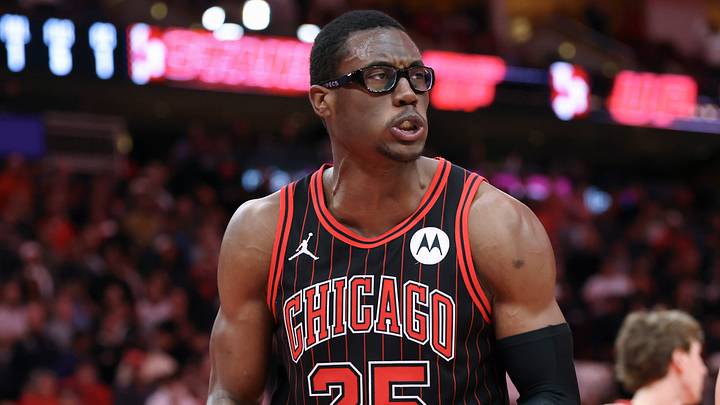
A trade deadline preamble of sorts emerged Wednesday as it relates to the Chicago Bulls in reporting from The Stein Line’s Jake Fischer, who reported that the Golden State Warriors made a call to the Bulls to presumably discuss trade scenarios that could solve the Warriors’ glaring roster availability problem with center Kristaps Porzingis.
Fischer also added an implication to rationalize the Warriors’ presumed motivation for contacting the Bulls, and that implication is Jalen Smith’s desirable combination of age, contract value, and three-point shooting capability. Fischer’s discussion of the Warriors’ perceived motives for acquiring Smith is fine. What is not fine is Fischer’s diagnosis of how the Bulls would possibly weigh a potential Jalen Smith trade decision.
"Chicago — like any rebuilding team across the next three seasons — has to factor in the league's new lottery rules when surrendering any player who can help them stay competitive. "Jake Fischer
"Those teams no longer have the same incentive to pursue draft assets and financial flexibility in every deal when a bottom-three record reduces your chances of winning the lottery in May."Jake Fischer
If the Bulls’ front office truly is reticent to trade Smith because of a desire to avoid the so-called “relegation zone” of finishing as one of the three worst teams in the NBA by the end of the 2026-27 season, then Bryson Graham and his staff are way off course in plotting their Chicago Bulls rebuild strategy. Relegation should be the farthest thing from the Bulls' 2027 trade deadline priorities.
Opportunity matters more than optimization
For those not deeply versed in NBA Draft scouting conversations, the 2027 NBA Draft class is expected to be a weaker crop of basketball talent compared to other draft classes of the 2020s.
So the 2026-27 Chicago Bulls invoking the relegation consequences of the NBA’s newly installed anti-tanking policy would actually benefit the Bulls’ rebuild agenda by avoiding a top-five draft pick in a perceived weak 2027 NBA Draft, thereby preserving the opportunity to acquire a top-five draft pick in the 2028 NBA Draft. The NBA’s anti-tanking policy now prevents an NBA team from selecting top-five draft picks in consecutive draft years.
Beyond draft opportunity, Graham’s Bulls front office should be hyper-focused on cashing in whatever trade return opportunities there are to be realized among the bevy of veteran players on the Bulls roster with short-term remaining salary like Jalen Smith or free-throw attempt enthusiast Norman Powell.
Beyond draft and veteran contract considerations, the Bulls simply need to accelerate their roster teardown that, in retrospect, should have started as soon as Graham took the job to run the Bulls’ front office.
Seven games into the 2026-27 NBA season, the Bulls are a pitiful 1-6 team that is a complete mixed bag of players that, outside of Caleb Wilson, aren’t showing any long-term promise to grow in value alongside Wilson.
Overall, it’s more important for Bryson Graham to quickly find a credible initial roster fit around Caleb Wilson instead of worrying about what pick he’ll earn in the first round of the 2027 NBA Draft.
 Add us as a preferred source on Google