

Over the last ten years, dating back to 2016, there has been a methodical evolution in the gameplay and player economics of the NBA. Isolation scoring, with emphasis on the midrange, has given way to prioritizing three-point shots, rim attempts, and transition offense.
If half-court offensive possession must occur, they are predominantly pick-and-roll actions seeking the best matchup or open shot for the offense. Team offensive concepts and multi-skilled players are what the NBA values in 2026, and these values have recalibrated the financial value of a player archetype that once was a staple of NBA rosters, “scorers”.

For additional context, we’re talking about the scorer who does nothing else but score. Remember guard Evan Fournier extending with the Orlando Magic on a five-year, $85 million fully guaranteed deal in 2016?
Or the 2017 restricted free agency (RFA) gold rush for forward Otto Porter Jr. that resulted in Porter Jr. earning a four-year $106.5 million max contract from the Washington Wizards, who matched a Brooklyn Nets max offer sheet for Porter Jr. Those same Wizards once gave forward Davis Bertans a five-year $80 million contract in 2020.
Forward John Collins was handsomely rewarded by the Atlanta Hawks for dunking on Philadelphia 76ers center Joel Embiid in the 2021 NBA Playoffs with a five-year, $125 million fully guaranteed contract.
Enter the 2023 NBA-NBPA CBA
The NBA’s scoring-fueled salary gravy train derailed once the 2023 NBA-NBPA Collective Bargaining Agreement took effect in July 2023. The salary cap has grown since 2023 buy the salary cap pie slices for "scorers" are shrinking year over year.
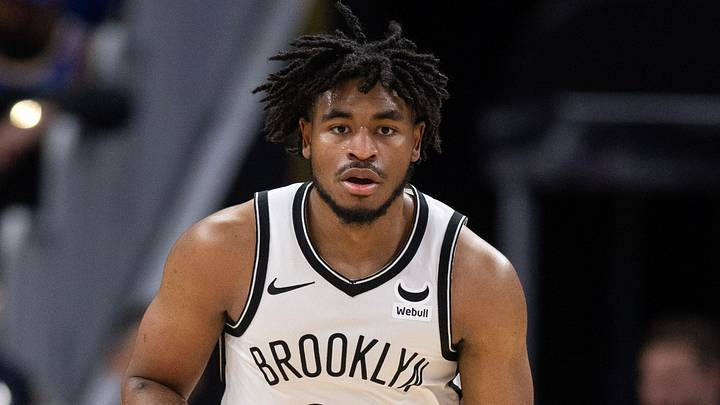
By the 2025 NBA offseason, a contrasting Brooklyn Nets restricted free agency posture with guard Cameron Thomas became a daily soap opera that resolved with the guard accepting his one-year $6 million qualifying offer, only to be waived by the Nets at the conclusion of the 2026 NBA trade deadline.

Subsequently, Thomas signed a rest-of-season minimum contract with the Milwaukee Bucks on Feb 08, 2026, only to dubiously exit the franchise after 18 games, when the Bucks waived Thomas on Mar 23, 2026. Barring a late offseason stroke of luck, Thomas may be out of the NBA altogether for the 2026-27 NBA season.
Also, let’s not forget the ongoing 2026 free agency mystery of Thomas’ fellow 2025 restricted free agency classmate, forward Jonathan Kuminga, who is still in search of a new NBA home.
The Bulls don’t need a scorer today or tomorrow
2026 restricted free-agent guard Bennedict Mathurin is unfortunately the heir to an emerging tradition of flawed players getting their salary and future NBA opportunity put through the sausage grinder that is the NBA restricted free agency process.

The process that some players likely don’t trust is exerting maximum market pressure on players who fail to find a contract extension before the start of the annual restricted free agency process.
“Scorers” are becoming a restricted-free agent market trend between Thomas, Kuminga, and Mathurin, and this should be a clear signal to the Chicago Bulls to completely avoid this player profile.

Peer franchises have no qualms about letting these sorts of players coast into an unforgiving market-setting process on their second contract or losing the player outright on the whim of another franchise tossing an outlier offer sheet price to their RFA.
What the Chicago Bulls need now and for the foreseeable future is top-tier talent, skilled decision makers at every position, and players who are positive additions to a collective team defense. Once that foundation is established, then the Bulls should focus on niche, commoditized needs such as scoring.
 Add us as a preferred source on Google