

If the 2026 NBA offseason were a night out at the club, it would be fair to say that we’ve reached the “last call” portion of the offseason.
Blockbuster roster moves have been made. The NBA balance of power between the East and West is decidedly hovering over I-95. The collective 2026 NBA offseason body of work from all 30 front offices has reached critical mass.
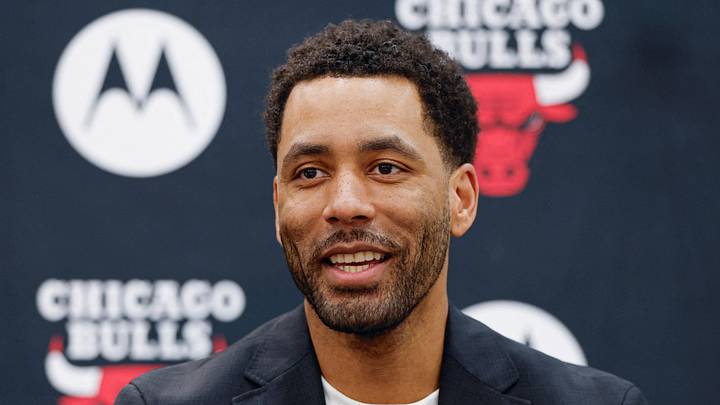
What better time than now to evaluate where the germinating Bryson Graham-era of the Chicago Bulls front office stands relative to its 29 other NBA peer front offices as the league calendar quickly approaches media day season.
School is back in session in Chicago, so it’s appropriate to group all 30 NBA franchises into three graded tiers: A, B, C.
- A - cream of the crop NBA front offices
- B - solid NBA front offices with room to improve
- C - basic NBA front offices that either haven’t made enough moves yet to be in a higher tier or, frankly, have done enough moves to definitely be stuck in this tier
A-tier NBA front offices
In the A tier, you unsurprisingly find the 2025-26 NBA Champion New York Knicks front office, helmed by Leon Rose, whose methodical roster reconstruction centered around Jalen Brunson over the last four seasons conquered the improbable challenge of securing the franchise’s first NBA title since 1973.
Equally appropriate in this tier is the San Antonio Spurs Brian Wright, whose runner-up 2026 NBA Finals defeat at the hands of the Knicks is still an outlier accomplishment considering the Spurs had not been a playoff team since the 2018-19 NBA season.
Mike Gansey of the Philadelphia 76ers is running an upstart top-tier front office via the 1-2 punch of acquiring both Jaylen Brown and LeBron James in a single offseason.
The Triumvirate of Onsi Saleh (Atlanta Hawks), Jeff Peterson (Charlotte Hornets), and Zach Kleiman (Memphis Grizzlies) earned their stay in the top tier as franchise who radically pivoted their rosters away from their point guards of the past towards stars-in-the-making in Jalen Johnson, Kon Knueppel, and Cameron Boozer, respectively.
Rounding out this tier are names you’ve come to expect: Sam Presti (Oklahoma City Thunder), Brad Stevens (Boston Celtics), Tim Connelly (Minnesota Timberwolves), Rafael Stone (Houston Rockets).
B-tier NBA front offices
This is a collection of middle-class NBA front offices that are making serviceable moves and could be or should be doing more to improve their competitive circumstances: Miami Heat, Indiana Pacers, Orlando Magic, Cleveland Cavaliers, Los Angeles Clippers, Los Angeles Lakers, Portland Trail Blazers, Washington Wizards, Phoenix Suns, and Toronto Raptors.
C-tier NBA front offices
You can’t spell Chicago without C, and that’s the tier Bryson Graham’s Bulls front office belongs in until he actually commits his flexibility and short-term contracts toward a long-term player who presumably complements Caleb Wilson or Graham starts to show how much of a bag he has in acquiring future draft capital.
Don’t worry, the Bulls have company here in the Detroit Pistons, whose NBA title window may never actually open based on playing it safe at the 2026 NBA trade deadline and being at risk of losing Jalen Duren if he decides to play the 2026-27 NBA season on his restricted free agency qualifying offer.
The spectrum of front offices in this tier oscillates between teams that need to make a few more moves before you fully judge their NBA management acumen, such as your Chicago Bulls, but also includes the Sacramento Kings, Milwaukee Bucks, Dallas Mavericks, Utah Jazz, and New Orleans Pelicans.
On the other end of the spectrum are franchises that should see nothing but red flags flying inside their building, such as the Golden State Warriors for squandering Steph Curry’s final years, the Denver Nuggets squandering Nikola Jokic’s prime years, and the Brooklyn Nets generally playing it too safe with assets and now living through peak little-brother mode thanks to the Knicks winning the NBA title.
 Add us as a preferred source on Google