

The trade deadline has come and gone, and whew, it couldn’t have been any busier. The Chicago Bulls made seven trades, with seven players coming in and seven going out. Perhaps most noteworthy, Chicago also acquired nine second-round picks, nearly tripling their draft capital.
Bulls’ trade-deadline overhaul
The shake-up was immense, but if anything, a clear theme emerged. The Bulls are finally tearing it down. After years of mediocrity, Vice President of Basketball Operations Artūras Karnišovas had enough, opting for a major midseason restructure.
Amid the flurry of trades, Karnišovas made his priorities clear. His long-term building blocks are obvious: Josh Giddey and Matas Buzelis, with 12th overall pick Noa Essengue also worth noting. These trades were clearly designed to complement these players, and especially Giddey.
Despite already having a guard-heavy rotation, four of the seven players the Bulls acquired at the trade deadline were guards. In contrast, the Bulls traded away only two true guards (Ayo Dosunmu and Coby White), though wings Dalen Terry and Kevin Huerter could be loosely counted toward that total. Still, the main takeaway is that Chicago overloaded its backcourt.
Yet these guards were added with Giddey in mind. The 6-foot-8 floor general is a unique talent. First, yes, he’s 6-foot-8, which is unusual for a point guard, even in today’s jumbo-sized NBA. Second, he’s a true pass-first guard. He thrives at jump-starting the fast break, directing the offense, and making his teammates better. That’s Giddey’s M.O. On the flipside, the Aussie isn’t a natural scorer. He’s improved as a shot-maker since arriving in the Windy City, but he’s not the type to hoist 20 shots per game. He leaves that responsibility to his teammates.
Guards built to complement Josh Giddey
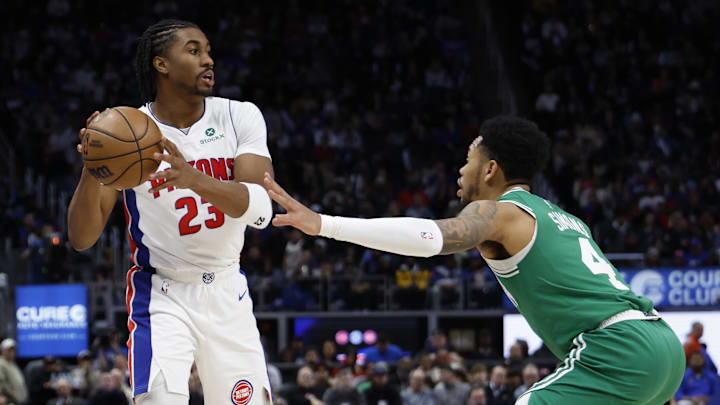
Now, before we go on, the Bulls didn’t exactly go after pure shot-chuckers. It’s not like they added Cam Thomas or Jordan Poole. Instead, Chicago acquired Anfernee Simons, Collin Sexton, Jaden Ivey, and Rob Dillingham. Sure, these guys can score (especially Simons and Sexton), but none are low-percentage, high-volume shooters. Dillingham might not fully fit the mold yet, but the idea behind his addition aligns with it.
What these guards have in common is that they’re capable isolation scorers who also function well as spot-up shooters. Simons is hitting 44.0 percent of his catch-and-shoot triples, Sexton 46.0 percent, Ivey 37.9 percent, and Dillingham 38.9 percent. In short, all of these guards are comfortable without the ball in their hands, allowing Giddey to continue running the show.
But that’s not all they have in common. These guards are small, and none are true point guards (sorry, Ivey), a role usually reserved for the smallest players on the court. In essence, the four recently acquired guards aren’t the easiest to fit into lineups, which helps explain why they combined for only 14 starts before arriving in Chicago.
However, as mentioned, Chicago’s starting point guard, Giddey, is atypical at 6-foot-8, which provides lineup flexibility. This allows the Bulls to deploy a talented, albeit smaller, guard alongside Giddey in the backcourt without compromising size. Players like Simons, Sexton, Ivey, or Dillingham can play their natural positions while matching up against the opposing team’s smallest player. It's a win-win scenario.
Lastly, Giddey is a surprisingly effective downhill attacker. Yet, he doesn’t rely on pure athleticism to get to the rim. Instead, he’s a herky-jerky driver who uses his size to his advantage. The guards Chicago acquired are quick and shifty, some more than others, but all complement Giddey’s driving style with their own quick-twitch play.
Chicago’s trade-deadline focus wasn’t just about moving its own players. The incoming players were eyed to complement Giddey, who's been made a priority by the front office. These newly acquired guards are on the smaller side, but that’s not a problem here, especially given their spot-up marksmanship and downhill athleticism.
 Add us as a preferred source on Google