

Let's start by acknowledging an unavoidable truth—the Chicago Bulls, to this point in the season, are one of the worst teams in the NBA.
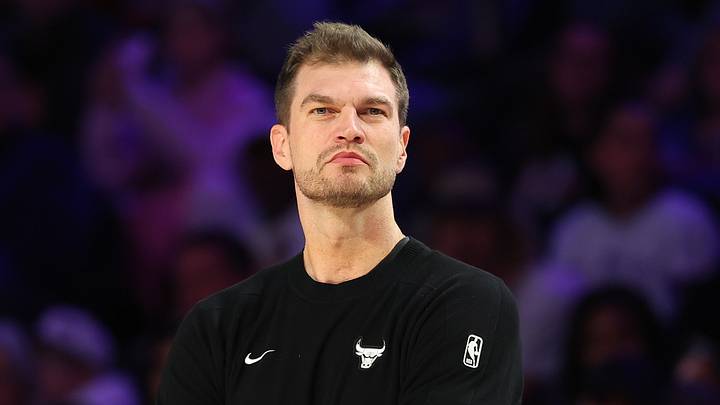
Even with a new defensive focus instituted by lead executive Bryson Graham, there's simply not enough talent on this roster in terms of rim protection and perimeter pressure to execute that at this point. Tiago Splitter's fast-paced, transition offense has also exposed some of the shortcomings of the central scorers of this team, and the offense as a whole has largely looked disjointed and ineffective through eight games.
To some extent, this was to be expected. After years of mediocrity and Play-In Tournament contention, Chicago finally decided to tear things down at last year's trade deadline, and it's going to be a while before a clear structure and future-looking hierarchy emerges for this roster.
But that blowout loss to the New York Knicks on Wednesday represented a low point of this early portion of the season, and it's now worth asking the question—is this the level this Bulls team is going to be stuck at for the remainder of 2026-27?
While there might be some improvement across the board, the answer, generally, feels affirmative. In one light, given the NBA's new Draft Lottery rules that punish teams that finish within the bottom three in the league, that may feel disastrous.
But in another light, perhaps it's not the worst outcome overall—especially considering the limited pathways Chicago has to make this team better in-season.
Back-to-back top five draft picks might not be in the Bulls' best interest after all
Again, this Bulls team has been bad. As in historically bad, at least through the first eight games. As it stands, they're currently 28th in the league in offensive rating and 30th in defensive rating. They've been outscored by double digits in each of their seven losses this season, and they're knocking down just 41.2% of their shots from the field to boot.
Even if the Milwaukee Bucks and Brooklyn Nets don't show much improvement over the course of the year, this feels concretely like a bottom three team in the East. But is that the end of the world?
A reminder likely isn't needed here, but Chicago picked in the top five of the 2026 NBA Draft, selecting Caleb Wilson with the fourth overall pick after some draft lottery luck vaulted the team up the totem pole. The NBA's new Lottery rules, designed to disincentivize tanking, have also stripped teams of the ability to select in the top-five of the Draft in three consecutive years while flattening the odds among the non-playoff teams outside of the bottom three in the league.
That means that, in any given year, Chicago's best chance at getting a top pick to augment this rebuild would likely be to finish with either the 11th, 12th, or 13th seed in the East, giving them three lottery balls in pursuit of that selection. But this draft class is considered to be a particularly weak one, and if the Bulls finish inside the bottom three, receiving just two lottery balls, that outcome 1) doesn't completely eliminate their chance at a top pick, and 2) also gives them a chance to preserve that outcome for 2027-28.
Now, with the new Lottery system, teams should essentially be trying to win late into the season using the talent that's on their roster. If the Bulls were performing well, there's no world where attempting to finish with a bottom-three selection would be an arguable standpoint.
But Chicago doesn't have many, if any, pathways to improving this roster this season. In fact, it will likely get worse as pieces like Norman Powell and Nic Claxton are dealt closer to the deadline. Assuming there's some improvement induced through free agency and natural internal development next season, finishing without a top-five pick this year would still put the Bulls in prime position to maximize their chances for one next year.
It's not the silver lining Bulls fans are likely hoping for, but it's the reality of conducting a rebuild in the modern NBA.
 Add us as a preferred source on Google