

Throughout NBA history, eras have been defined by the speed of the game. Some of the greatest teams in history are lauded for their pace and ability to dictate the speed at which both teams play. Modern-day basketball has returned to a high-octane style of play, along with an emphasis on the transition game.
Whether it's the seven-second Suns or the Showtime Lakers, some units have mastered the up-tempo playstyle. However, that requires a certain level of cohesion and personnel. Neither of which the 2026-2027 Chicago Bulls have in their current state.
Through eight games, the Bulls lead the NBA in pace. According to ESPN's "pace factor" rankings, Chicago averages 108.2 possessions per 48 minutes, or one regulation game. The next closest team is Miami, which averages 105.5 possessions. This high-tempo approach aligns with first-year head coach Tiago Splitter's vision for the team. Before the season, Splitter stressed the importance of a young team playing fast and getting easy buckets first.
Splitter's approach has not translated into wins, with the Bulls sitting at 1-7. Despite the poor record, the Bulls are running the game plan and getting the looks the offense is designed to get. Shots at the rim and catch-and-shoot threes are optimal for this offense to work.
The problem is execution once the team gets to their spots. The team is bottom of the barrel in efficiency in nearly every aspect. Overall, the team has shot just 41.2% from the field and a league-worst 27.2% from long range on over 42 attempts per night.
While the abysmal shot-making leaves much to be desired, it could be a blessing in disguise. The Bulls can build the type of roster Splitter needs to run the offense. Splitter will certainly be tested in his ability to adjust lineups and rotational depth to optimize the current system with his active personnel. As it stands, the current Bulls roster is not cutting it if Splitter hopes to continue with his vision. A change is paramount if the Bulls want this fast tempo to work.
Identifying the clash between personnel and philosophy
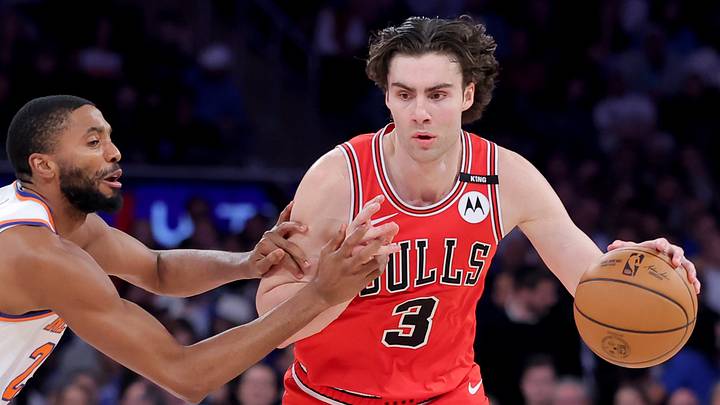
Under the current scheme, it is apparent that talent doesn't automatically equal success. The backcourt pairing of Josh Giddey and Norman Powell has been lackluster in its first handful of games together. Giddey's playmaking and Powell's shot-making seemed like they could work on paper, but the offense often stalls in Giddey's hands and ends with Powell taking a poor-quality shot as the team's fallback option when a possession breaks down.
The youth factor has also been an obstacle the team has faced throughout the season. Caleb Wilson has shown flashes of being a franchise cornerstone. Meanwhile, Matas Buzelis, whom many expected to take a leap, has gotten off to a slow start in the new system. Splitter's vision includes a team-centered lineup and continuous ball movement. The young stars can get caught in tunnel vision, leading to ill-advised shots at times, but the duo still has time to adapt.
Splitter should keep letting Wilson and Buzelis grow into their roles in the offense. However, if the veterans don't fit into the picture now, it may be best to look elsewhere for answers sooner rather than later.
For immediate relief, the Bulls should turn to their own bench. Rotational pieces like Tre Jones and Buddy Hield add a combination of playmaking and shotmaking until the front office can find a more permanent fix. Down the line, it seems necessary for the Bulls to make additions via the draft, trade and free agency accordingly.
It is far too early to tell whether the up-tempo style is ill-suited long-term, but with their current rotation, the Bulls will keep getting run out of the gym. Unlike the eras of the seven-second Suns and Showtime Lakers, most modern-day NBA teams can play at a fast pace. So if you're not fit to play at that pace, your opponent will beat you at your own game.
 Add us as a preferred source on Google